

Sunday, July 09, 2006
Website writing
In the summer of 2004 I answered an ad on Craigslist for a start-up Internet company located in Manhattan. Seth ..... needed five websites containing 15 sub-topics, each one page in length. The topics included subject matter on the law, obesity, mental health, nutritional supplements and love. He needed these 75 pages of writing--averaging 250 words per page--in less than two weeks. That's almost 19,000 words--the equivalent of about half-a-novel.
I accepted the challenge and met his deadline, although I would not like to do a job this difficult under such a tight deadline again.
Of the five sites, only one remains in publication, "Beyond Legal." The other four were samples for clients. I'm not clear what Seth was using the websites to accomplish. But they no longer exist.
Here is a sample from "Beyond Legal," addressing the challenges of being sued.
The Unthinkable: Being Sued
From www.beyondlegal.com
Written by Diane De Rooij, June 2004.
There are few moments in life where the stomach sinks so deeply as the moment you are served with a summons to appear in court and defend yourself against a lawsuit. In your shock and horror, you may not want to admit or consider that you need a lawyer. But make no mistake. No amount of righteous rightness can substitute for a savvy attorney. Even if you are innocent, you may end up losing everything you own. If you are not innocent, you need an attorney even more, to advocate for you and seek a fair settlement.
When summoned, you have a limited time to answer. Use this time to find the right attorney. If you need more time, you may contact the court clerk and ask for the forms you need to ask for an extension. In the meantime, start checking your insurance policies. If there is a possibility your property will be seized if you lose, sometimes homeowners insurance will pay for a portion of your legal representation.
From the moment you are served until the day you appear in court, speak to NO ONE about the issues contained in the lawsuit. Anyone you talk to can be called to court to testify against you. Furthermore, discussing conversations and documents that go between you and your attorney can vitiate the privilege, which is essential in any legal action.
Once you have an attorney, work toward a resolution quickly. Look into settlement, mediation, arbitration and dismissal. All these options will cost you money, but can’t compare to your financial exposure if you lose in court.
If you go the distance, a judge or jury will determine liability—for the defendant and/or the plaintiff. As a defendant, the decision may be that you are not liable or responsible. Or the judgment may be split between you and the plaintiff, if the judge or jury determine each of you shares a percentage of the liability.
Tell your attorney everything, and tell him or her the truth. Don’t leave anything out or start shredding documents to protect yourself. This is a perfect way to let your attorney get sandbagged in court and for you to lose it all. And even if you are innocent and outraged at the insult of being sued, stay calm and reasonable. Don’t taunt your opponent. Don’t act cocky. Don’t appear bitter.
When judges try to determine who is being truthful and who is lying, they look for an appearance of guilt—shifty eyes, shaky voice, angry face. If you believe the truth will set you free, be calm, cool, collected and civil. Make eye contact with the judge and jury, as well as with your opponent.
Remember, even though it seems like the end of the world to you, your plight means very little to the members of the court who will hear your case. Try to keep everything in perspective and with out drama. Be brief and respectful.
Make sure you turn to your attorney for advice if there are any elements of the case that make you feel uncertain. Let your attorney protect you. Detach from the fear and have confidence. You will have your day in court soon enough.
I accepted the challenge and met his deadline, although I would not like to do a job this difficult under such a tight deadline again.
Of the five sites, only one remains in publication, "Beyond Legal." The other four were samples for clients. I'm not clear what Seth was using the websites to accomplish. But they no longer exist.
Here is a sample from "Beyond Legal," addressing the challenges of being sued.
The Unthinkable: Being Sued
From www.beyondlegal.com
Written by Diane De Rooij, June 2004.
There are few moments in life where the stomach sinks so deeply as the moment you are served with a summons to appear in court and defend yourself against a lawsuit. In your shock and horror, you may not want to admit or consider that you need a lawyer. But make no mistake. No amount of righteous rightness can substitute for a savvy attorney. Even if you are innocent, you may end up losing everything you own. If you are not innocent, you need an attorney even more, to advocate for you and seek a fair settlement.
When summoned, you have a limited time to answer. Use this time to find the right attorney. If you need more time, you may contact the court clerk and ask for the forms you need to ask for an extension. In the meantime, start checking your insurance policies. If there is a possibility your property will be seized if you lose, sometimes homeowners insurance will pay for a portion of your legal representation.
From the moment you are served until the day you appear in court, speak to NO ONE about the issues contained in the lawsuit. Anyone you talk to can be called to court to testify against you. Furthermore, discussing conversations and documents that go between you and your attorney can vitiate the privilege, which is essential in any legal action.
Once you have an attorney, work toward a resolution quickly. Look into settlement, mediation, arbitration and dismissal. All these options will cost you money, but can’t compare to your financial exposure if you lose in court.
If you go the distance, a judge or jury will determine liability—for the defendant and/or the plaintiff. As a defendant, the decision may be that you are not liable or responsible. Or the judgment may be split between you and the plaintiff, if the judge or jury determine each of you shares a percentage of the liability.
Tell your attorney everything, and tell him or her the truth. Don’t leave anything out or start shredding documents to protect yourself. This is a perfect way to let your attorney get sandbagged in court and for you to lose it all. And even if you are innocent and outraged at the insult of being sued, stay calm and reasonable. Don’t taunt your opponent. Don’t act cocky. Don’t appear bitter.
When judges try to determine who is being truthful and who is lying, they look for an appearance of guilt—shifty eyes, shaky voice, angry face. If you believe the truth will set you free, be calm, cool, collected and civil. Make eye contact with the judge and jury, as well as with your opponent.
Remember, even though it seems like the end of the world to you, your plight means very little to the members of the court who will hear your case. Try to keep everything in perspective and with out drama. Be brief and respectful.
Make sure you turn to your attorney for advice if there are any elements of the case that make you feel uncertain. Let your attorney protect you. Detach from the fear and have confidence. You will have your day in court soon enough.


Tuesday, July 04, 2006
Monday, July 03, 2006
Working hard for her own pleasure
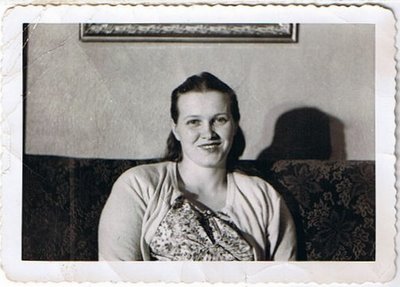
SHE BENDS OVER THE UTILITY SINK, her galvanized bucket receiving a stream of scalding hot water, and pours granules of Spic-N-Span through the clouds of steam.
On this average 1950s Saturday night, in her small town, she sets up her tools, preparing for the task ahead.
Like all the other farmwives, she has lived through a week of dirty boots tracking mud across her floors, spilled milk, and wrestling children. The black-and-white checkerboard of the kitchen floor is covered with the evidence.
Like all the other farmwives, Sunday is her day. In the morning she will put on her seamed stockings and her best dress, and she will go to church.
After the service is over, after the men have stood in circles and smoked outside, after the weather has been discussed and diseases of cattle reviewed, she will go back to her house. Someone will come by—the minister, some in-laws, someone she sees only on Sunday at church—and she will serve them coffee, and the cake she made for Sunday.
But before her company arrives, she will put her house in order. No matter how tired she is, no matter how much work she has done, on Sunday morning her kitchen floor will be clean.
So on Saturday night, after all the children are bathed, their hair wound into pincurls, their tiny Sunday clothes ironed and hung up for tomorrow, she mops the floor.
And in all the other farms for miles around, lights glow from kitchen windows, making silhouettes of farmwives, mothers all, dedicated workers with reddened hands, purposefully stroking ragmops across old linoleum, bending over steaming buckets, their last task before sleep and a Sunday of rest.
IF SHE WANTED TO, MY MOTHER COULD STILL MOP A MEAN FLOOR. In a few days, she will be 73 years old, but her years at hard labor on the farm have only made her strong.
Now she has a no-wax floor, but it still needs tending, and she still frets after a week of grandkids, a mud-footed husband and good old Wenatchee clay have left their marks.
I keep this image of my mother because she still mops the floor, and she does it with the same pride and craftsmanship she demonstrated on the old farmhouse linoleum.
It’s not so much that I want to be a good farmwife and mother or match my mother’s energy level. And I confess: I do not mop my kitchen floor once a week.
In a sense, I learned more about meeting goals and getting things done from watching my mother on Saturday night than I ever learned after we left the farm.
That floor had to be mopped, not to teach her daughter a lesson about work, or even to make a favorable impression on the neighbors. It had to be mopped so my mother could have time to herself, to create a pure spot of joy in her hard life.
When she woke up a few hours later she could indulge in a moment of pride, standing in the kitchen doorway and seeing the pristine white squares against the shiny black ones. She had done a hard job well for her own pleasure.
WHEN I MOP MY FLOOR, IT’S NO ACCIDENT THAT I DO IT ON SATURDAY NIGHT, with all the lights off in the house but the one in the kitchen. And while I stroke my modern sponge mop across the black-and-white squares of my no-wax vinyl, I fall into a trance made of love and reverence for my mother.
I HAVE WRITTEN THIS STORY IN MY HEAD on every Saturday night that I mopped my own floor, trying to imagine how it felt to be a woman with eight children, living on a farm in the 1950s.
Like any good daughter, I feel shy but intrigued when I try to stand in my mother’s shoes. But I do know how she felt, because she still feels that way today.
When I go to visit after she’s cleaned the kitchen, she says, “Look at my floor! Isn’t it clean?” After all these years, it still brings her joy.
She taught me how to mop a floor, but that’s not all I learned. My mother taught me how to do a hard job well for my own pleasure.
Looking for Jack
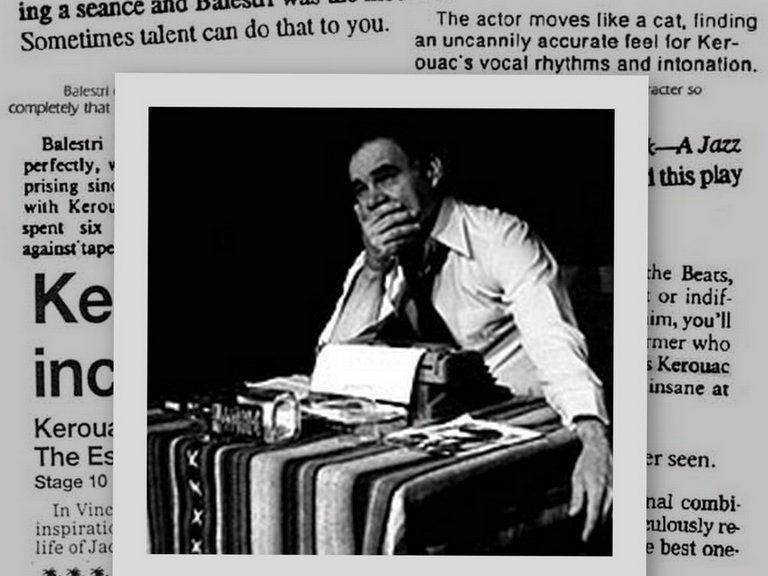
Kerouac: The essence of Jack
A jazz play by Vincent Balestri
Velvet Elvis Arts Lounge Theater
107 Occidental, Seattle, 206/624-8477
Playing now through February 1997
I wrapped my coat tight around me against the cold wind coming off Puget Sound and walked from the bus stop under a bridge through bodies lying on the ground in sleeping bags under boxes on downtown Seattle sidewalks heading downhill to meet up with Jack. “Cold enough for ya?” asked one wino now known as Homeless Man in the politically correct Nineties as I passed him by wishing I hadn’t worn these heels that caught on the bricks of the streets in the old underbelly of town.
The outside walls of the theater were plastered with reviews I read shivering, not from cold but from anticipation and sheer living thrill, nervous as a virgin, hoping he would be there soon, hoping he would speak just to me.
A crowd of bobbing black berets, old and young, dressed by nordstroms, nordic-looking northwesterners surrounded me, staring into the black box office hole where will-call tickets were waiting. The window opened; the door opened; the polite queue formed one line and filed in.
A jazz trio played on the stage as if they were unaware of the people coming in. The crowd bustled, rustling 8-page programs, reading about Jack and his family, and how this Essence came to be. No whisky, no beer, no sweet tokay, just a quiet little jazz group, modern white hipsters, drums bass and sax until the horn player stopped. He walked to the edge of the stage and said, “Hey Jack….Jack? Are you coming in?”
A few seconds later a stocky dark-haired man took the stage as the house lights went down, raising his arms like a maestro, his back to the people, commanding the boys to play bebop as he danced spastically, kicking out his feet left and right like a guy who can’t dance but must dance because the music says go man go!
In a voice made of flat chicago As and lowell Ahs he speaks to the crowd: Jack Kerouac, thanking us for coming, thanking the band, thanking the actor who will play him tonight. He explains that the play will have two parts; the first part, he says, will take him through his one-page biography up to publishing On The Road. “Then we’ll have an intermission,” he says, grinning insanely,“ and when we come back, you can ask me some questions and then I die.”
He peels off, burns rubber and dances, writhing, his back to me, a mad wordless prologue made of this stage, a desk, a bookcase, empty bottles of whisky and wine, a dervish in a white shirt and black chinos, possessed by a spirit, maybe The Spirit, I don’t know, but there’s no turning back now.
For the next two hours he reads, talks, carries on imaginary conversations with Gerard, his father, his mother, his wives. He comes down off the stage and embraces hands in the first row, cupping one hand inside his two, speaking quietly sometimes seeming afraid, then leaping back onto the stage, vamping wildly, a madman trying to appear normal, a little boy seeking love, a shy messiah checking for blood stains on his hands and feet and finding it not there but on the hands and feet of those he lived with, escaped from, lost.
He weeps, bangs, sweats, transcends, suspends disbelief, reaches satori in seattle transformed as people shift in their seats unable to take their eyes from the stage.
I find my breast swelling with sadness over and over again, my heart aching, tears welling up in my eyes. I want to yell, “JACK! Wait! Don’t go….” But he does, yet he is, and as every memory I have of the 50s and 60s stampedes through my psyche he descends into the end of his life and dies.
I missed him again, I think to myself. As in life, where he was dying from drink just as I was finishing On The Road, here in the Velvet Elvis theater he died again, looking right through me toward his destiny with the Sal Paradises and the Dean Moriartys and beer belly bars in Florida.
What did I want to learn about him that night? The others had asked him about LSD, Burroughs, Buckley. I blurted out, “Did you ever love anybody?”
Yeah…of course I did…” he said, his eyebrows knitted up in confusion and sadness, as if I had betrayed him, and his eyes drifted away from mine and he looked at his feet. “Yeah,” he said, all trancelike, “I love all of you…”
It was over for me then, but I stayed until the performance ended, wondering why I’d asked that question. He owed me nothing, and in a very real sense, I owed him everything that I have as a writer, the very structure of my life since 1969, the people I have known and loved, the travels I have taken, the way I look at living.
Outside of the theater I felt suddenly disconnected, wanting looking seeking wordlessly aching. I’m not one for pilgrimages, or meshing fantasy with reality, and I had never really wanted to meet Jack or even have some silly souvenir to make him seem more real. But for many years I had felt ambivalent about him--his writing, his life, his influence--and he’d sort of drifted around insignificantly in my consciousness.
Jack Kerouac was more to me than a footnote. But I was trying to deny what he meant to me, and standing outside in the surreal winter night I heard him say what I felt: “I have nothing to offer anyone except my own confusion.”
Vincent Balestri made Kerouac come back to life—no mean feat, considering the seemingly endless individual interpretations of who Jack was. He honored him and his life and his death. He made me believe. He forced me to look within again for honesty and courage, as Kerouac had done so many years ago.
What I really found that night when I went looking for Jack was that my questions will never be answered unless I answer them myself.
Saturday, July 01, 2006
Fine and Commercial Art
In addition to my work in writing, I have also studied, worked in and sold art, both fine and commercial.
Using graphics programs at every generation, I learned to use the capabilities of each one to create the best possible graphic for the technology of the day. As such I worked with small magazines, newspapers and subsidy presses, creating designs, advertisements, layouts, photographs, drawings and other elements of publishing.
A few of those items appear below.
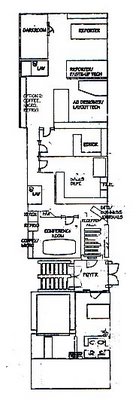 ^A simple floor plan for a proposed office space merger of two publishing concerns.
 ^A simple line drawing advertisement commissioned to the real estate client's specifications.
 ^The second line drawing used in a consecutive ad, again at the client's request.
 ^A snowy egret: graphite on paper
 ^Loon, graphite on paper.
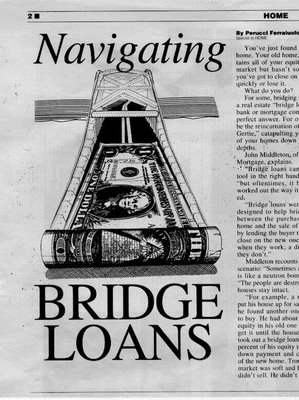 ^Story art, HOME Magazine, Bellevue Journal American newspaper
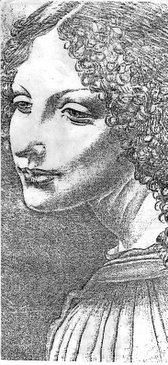 ^Detail from "Virgin of the Rocks," Leonardo da Vinci, graphite on Coquille board
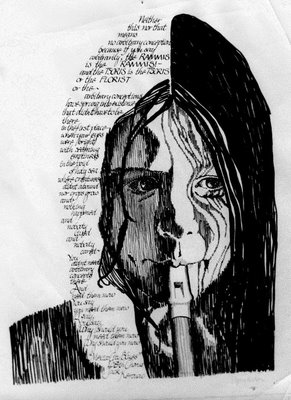 ^Mixed art project, calligraphy and water color pens
Using graphics programs at every generation, I learned to use the capabilities of each one to create the best possible graphic for the technology of the day. As such I worked with small magazines, newspapers and subsidy presses, creating designs, advertisements, layouts, photographs, drawings and other elements of publishing.
A few of those items appear below.
 ^A simple floor plan for a proposed office space merger of two publishing concerns.
 ^A simple line drawing advertisement commissioned to the real estate client's specifications.
 ^The second line drawing used in a consecutive ad, again at the client's request.
 ^A snowy egret: graphite on paper
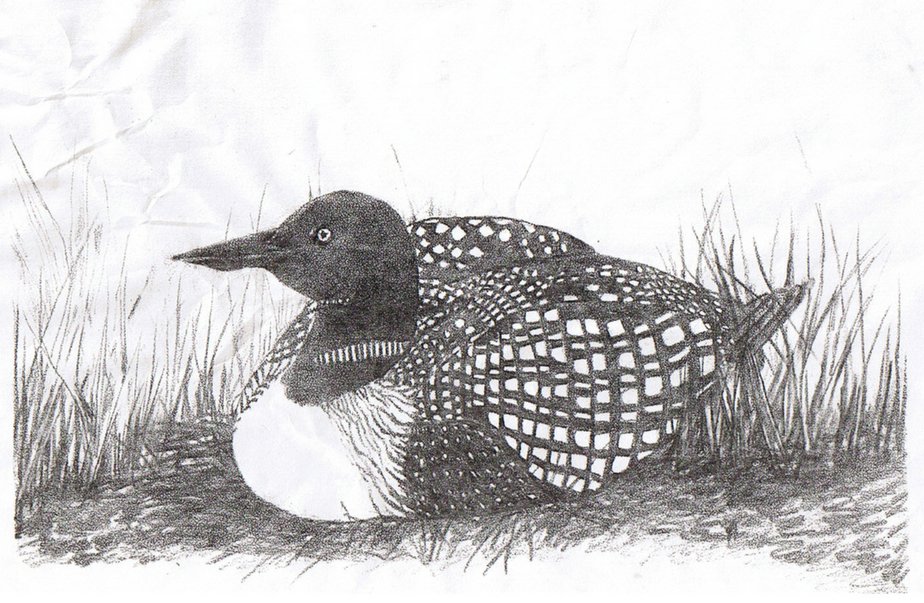 ^Loon, graphite on paper.
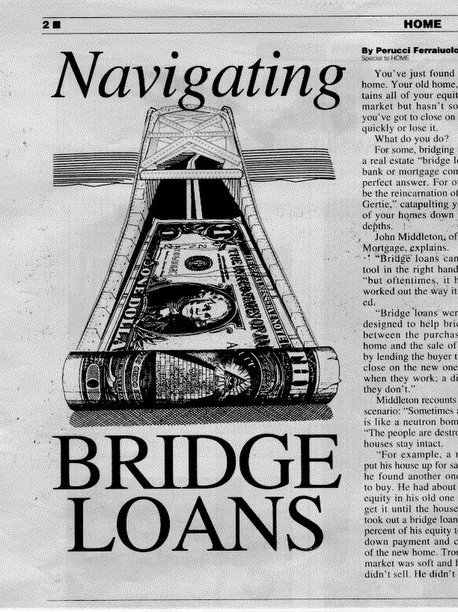 ^Story art, HOME Magazine, Bellevue Journal American newspaper
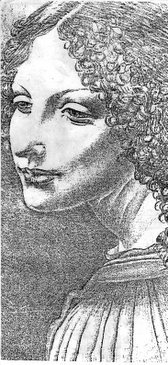 ^Detail from "Virgin of the Rocks," Leonardo da Vinci, graphite on Coquille board
 ^Mixed art project, calligraphy and water color pens
Thursday, June 01, 2006
Friday, May 12, 2006
Friday, May 05, 2006
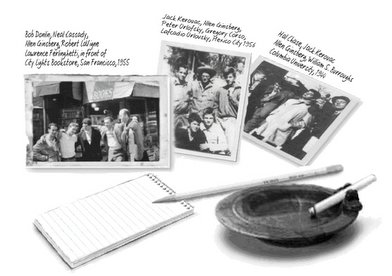
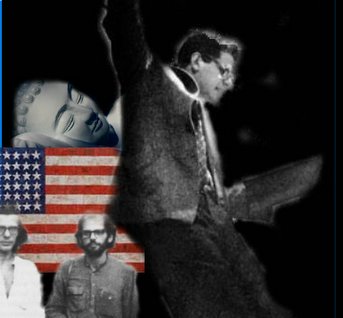
Beat Generation webpage tributes
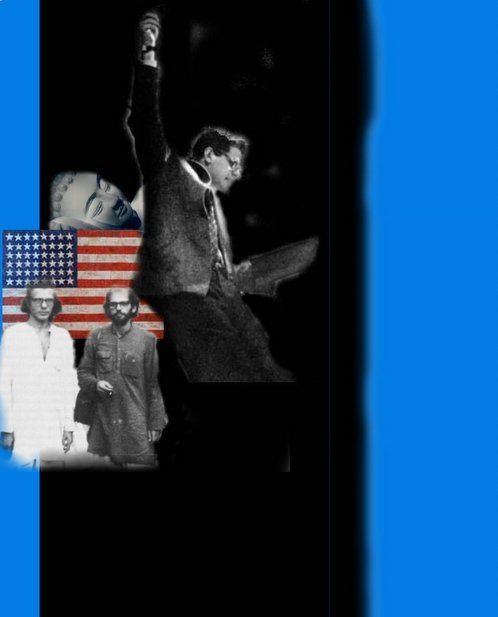
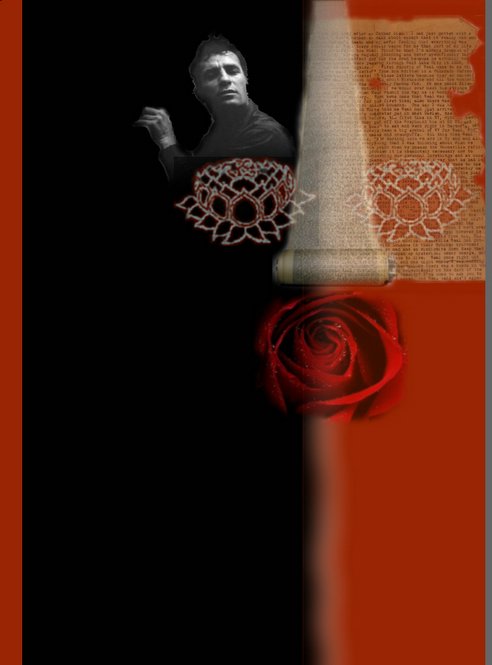
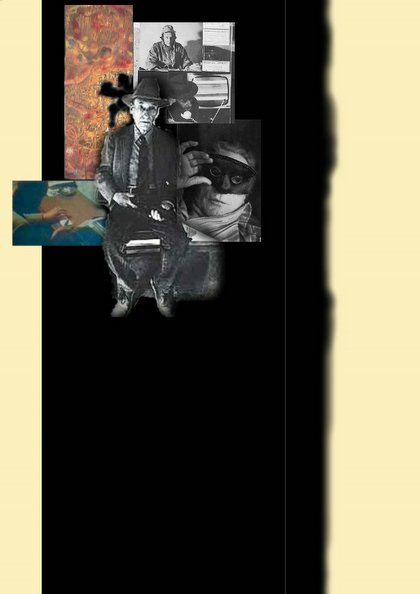
As a corollary to my Beat University website, tribute pages for the "Beat Triune,"--Jack Kerouac, Allen Ginsberg and William S. Burroughs--are in the works. These pages will focus on the specific contributions of these three men to the culture and genre of the mid-20th-century literary movement known as the Beat Generation.
The pages follow a collage concept and include iconic images relevant to the personalities they depict. They are designed as introductory vehicles for students of American literature.
Clicking on each image will launch a larger version of the page or design.
Allen Ginsberg

Jack Kerouac
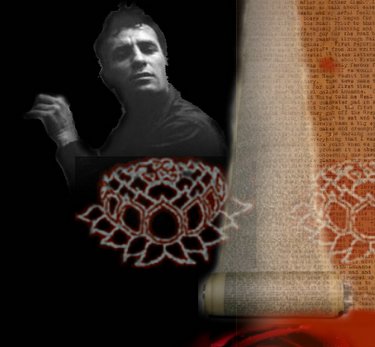
William S. Burroughs
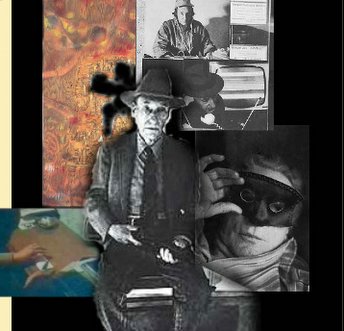
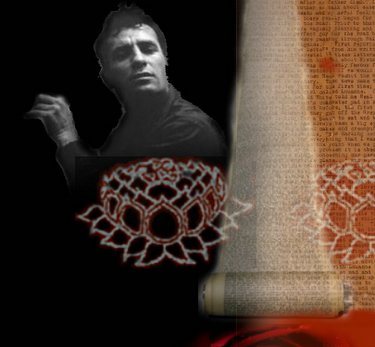
Draft of another William S. Burroughs graphic test, for future reference.


The pages follow a collage concept and include iconic images relevant to the personalities they depict. They are designed as introductory vehicles for students of American literature.
Clicking on each image will launch a larger version of the page or design.
Allen Ginsberg
Jack Kerouac
William S. Burroughs
Draft of another William S. Burroughs graphic test, for future reference.


Sunday, January 01, 2006

Saturday, December 31, 2005
Censorship in the 20th Century
In 2003, I was invited to write a 3,000-word exegesis of the history of censorship in the 20th century. I did so happily.
A revised version of this piece was published in The Encyclopedia of Beat Culture, edited by William Lawlor, ABC-CLIO, Inc., (c)2005.
In democratic societies where freedom of expression is a right of all citizens, censorship runs contrary to principle. Yet the practice of government censorship to chill discourse or protect specific classes of citizens is not uncommon as a response to new media, radical ideas or community visibility. In post-World War II America, the creative artists of the Beat Generation were a major target of government censorship.
Although the United States Constitution and Bill of Rights provide an outline of the rights of free people, these rights are not seen as absolute. The American government is empowered to assign consequences to acts, and can use actual or invented standards of behavior to justify controlling information, at the inclination of the administration. By assuming that the books, performances and magazines published by members of the Beat Generation were harmful to the well-being of organizations, individuals, or society as a whole, censorship was seen as the duty of the state.
The level of governmental vigilance was proportionate to the technologies available to a free and prolific media. In mid-20th-century America, the facility of the printing press to produce information for the masses suddenly became greater than the power of the government to regulate its output.
Censorship assumes absolute standards and morals which should be obeyed, and this paradigm was certainly in play following the second world war, as writers and poets of the Beat Generation began to comment about and rebel against the world they observed. Government, community, legal and religious bodies repeatedly attempted to control the propagation of the Beats, whose opinions were viewed as shocking and demoralizing.
Deviances from the culturally obedient norm included frank descriptions of sex and drugs, celebrations of the language, and critical or rebellious political thought. All was tacitly forbidden. Using its powerful law enforcement agencies and the established distribution system of the postal service, the government network of the 1950s set about correcting the course art was taking.
Although censorship was not an unusual occurrence, having been plied against writers admired by the Beats including James Joyce (Ulysses, 1934) and Henry Miller (Tropic of Cancer, 1936), new publishing technologies gave Beat writers and publishers genuine power. The ensuing battles for freedom of expression catalyzed the adversarial relationship that often exists between artist and state, and forced dramatic confrontations in national and international settings.
Early in the 1950s the voices of the Beat Generation were still confined to small audiences. The conservative publishing industry didn’t see the literary value or commercial appeal of their works. “The identity of a poet was established by publication, and it was essentially nationwide publication that mattered,” poet Gary Snyder remarked. He began to seek publishing outlets in 1952, sending his work to Poetry magazine, where it was regularly rejected. The idea of the “little magazine” and alternative publishing outlets began to grow.
Straddling the line between the forbidden and the respectable was James Laughlin’s New Directions Press (1936). With a catalog that included works by Henry Miller, Dylan Thomas and William Carlos Williams, New Directions had been a model for City Lights publisher Lawrence Ferlinghetti since he had visited its offices in New York City in 1946.
Because New Directions had always featured great writers from outside the mainstream, including many writers admired by the Beats, it was probably the most desirable—and most attainable—publishing outlet for their work.
New Directions owned the American rights to Henry Miller’s books, but Laughlin was reluctant to risk his legitimate status by by drawing fire on his own press. Although he was frequently queried by Beat writers, Laughlin passed on the opportunity to be their publishing refuge.
Poet and publisher Lawrence Ferlinghetti (1921- ), co-founder of City Lights Books in San Francisco (1953), was not so circumspect. Borrowing from a Parisian model for publishing affordable books, Ferlinghetti launched his Pocket Poet Series in 1954 with a collection of his own poems titled “Pictures of the Gone World,” issuing slim, inexpensive volumes of poems in generous quantities, virtually creating the mass market for alternative literature.
Ferlinghetti continued to make publishing history when the U.S. Customs Service seized 520 copies of “HOWL and Other Poems.”
“HOWL,” a sexually political exegesis of 1950s American mores written by Allen Ginsberg (1932-1997) was debuted by Ginsberg at the storied Six Gallery reading in San Francisco on 7 October 1955. Witnesses of this landmark spoken-word performance saw the poem as a gauntlet thrown down at the government’s feet. Publishers vied for the right to print it, but that distinction went to City Lights.
Before deciding to publish “HOWL,” Ferlinghetti consulted with the American Civil Liberties Union (ACLU) to determine the extent of his legal exposure. The potential for financial ruin was real, given the need the publisher might have to spend a fortune defending it in the courts.
In 1956 Ferlinghetti had the book printed in England by Villiers and imported to the United States for sale in his bookshop. The first edition cleared U.S. Customs without incident and began selling in the fall of 1956. But in March of 1957, part of the second printing was seized in customs under Section 305 of the Tariff Act of 1930. Ferlinghetti and his partner, Shigeyoshi Murao, were arrested.
The ACLU informed the customs service that it would contest the legality of the seizure. Simultaneously, Ferlinghetti announced that a new edition of “HOWL” was being printed domestically, effectively circumventing customs’ jurisdiction. “If it is an obscene voice of dissent, perhaps this is really why officials object to it,” he said. “Condemning it, however, they are condemning our world, for it is what he observes that is the great voice of Howl.”
An ironic result of the government’s seizure of “HOWL” was that sales of the book skyrocketed. By the end of the trial, 10,000 copies had been sold and it was well on its way to becoming one of the best-selling books of poetry in American history. Writing in the Evergreen Review (1957), Ferlinghetti quipped, “[The San Francisco Collector of Customs] deserves a word of thanks for seizing... “Howl and Other Poems,” thereby rendering it famous.”
The government’s obscenity trial against “HOWL” commenced on 22 August 1957 with ACLU attorney J.W. K. Erlich leading the defense against anti-pornography prosecutor Ralph McIntosh. The book received great support in the American literary community, including the glowing review by the New York Times’ Richard Eberhart, who had written, “It is a howl against everything in our mechanistic civilization which kills the spirit, assuming that the louder you shout the more likely you are to be heard.”
In October 1957 (date) Judge W. J. Clayton Horn issued his ruling, taking into consideration all relevant case histories and the First Amendment. He concluded that the perception of obscenity was the responsibility of the individual’s minds who found it, writing, “In considering material claimed to be obscene it is well to remember the motto: Honi soit qui mal y pense.”
Following City Lights’ successful defense of “HOWL,” the conservative publishing establishment took a greater interest in the Beat writers, largely because of the commercial appeal of the edgy, controversial material contained between the covers.
In 1932, Jack Kahane founded Obelisk Press, publishing the works of Henry Miller and Lawrence Durrell. These books were banned in Britain and the United States, but continued to be printed in Paris. In 1953, Kahane’s son, Maurice Girodias, founded Olympia Press to carry on his father’s work.
Avant garde writers found a publishing haven in Paris. A succession of Beat Generation writers expatriated there, living in the famed “Beat Hotel,” sometimes employed as contract writers who created “dirty books” out of assigned titles for Olympia Press.
It was in the Beat Hotel that William S. Burroughs (1913-1997) produced the first manuscript for “The Naked Lunch” in 1957, which was offered to Olympia for publication. Girodias passed on it, claiming that the manuscript was a mess and it needed major rewriting.
Even as Olympia’s cottage industry was thriving, the French government was being pressured by Great Britain to label the writers in Olympia’s catalog obscene. From 1956 forward, all English-language titles issued by Girodias were automatically banned, forcing him to fight against censorship for each one—a scenario which ultimately forced him into bankruptcy.
In 1957 Olympia published Vladimir Nabokov’s “Lolita,” an act which especially interested Barney Rossett (1920-), founder of Grove Press (1951) in New York, who was interested in acquiring the American rights. This event established an association between the two presses that accelerated the international struggle of writers and book publishers to be free from government interference.
Although Grove Press, like City Lights, had New Directions as its model, it owed as much to Olympia Press as its unofficial partner. Unlike James Laughlin, Rossett was entirely willing to break down the boundaries in his personal fight against literary censorship. Grove’s initial catalog was unremarkable, but in 1959, because of cataclysmic struggles being experienced by alternative book publishers and literary magazines alike, Barney Rossett leaped into the fray, releasing an unexpurgated version of “Lady Chatterley’s Lover” by D.H. Lawrence.
As Rossett advanced the American literary rebellion, the government responded with efforts to ban the book, but the courts ruled in Grove’s favor. Rossett reaped the profits of notoriety, doubling the number of editions of “Lady Chatterley’s Lover” printed and sold.
New Directions had held the American rights to the works of Henry Miller since the 1930s, but had cautiously elected not to publish them. Now Barney Rossett began a campaign to convince Miller to allow Grove Press to acquire the rights, enlisting Maurice Girodias to assist him. In 1961, Grove issued Miller’s “Tropic of Cancer.”
The subsequent legal battle did not go as smoothly as “Lady Chatterley’s Lover” had, however, as some 60 separate legal actions were brought against booksellers who were enjoined or arrested and accused of selling pornography.
Still, the literature of the avant garde was thriving in underground and literary magazines. Rosset’s own creation, Evergreen Review, a quarterly literary magazine founded in 1957, edited by Donald Allen, brought East and West Coast writers together, allying the San Francisco Renaissance with New York’s alternative publishing establishment.
The widening exposure of the Beats to the reading public caused great controversy in the literary world, assuring an escalated assault by the government against these writings while creating a significant commercial market for the forbidden fruit.
The decision to publish “HOWL” in Evergreen Review Number Two helped make the book a best-seller for City Lights and anchored the literary magazine in its place as the unofficial forum of the Beat Generation. Evergreen Review routinely published Kerouac, Ginsberg, Burroughs, Snyder and a host of avant garde writers, offering them wide national exposure, and Barney Rossett established himself as chief crusader against literary censorship.
As the national and international network of avant garde writers grew stronger, attention was drawn to “The Naked Lunch” by William S. Burroughs, perhaps the most unintelligible and blatantly vulgar work yet produced by any 20th century writer.
The Chicago Review, a literary magazine under the editorship of Irving Rosenthal and Paul Carroll, had been monitoring the legal and creative events of the San Francisco Renaissance and began soliciting manuscripts from Beat writers. The spring 1958 issue was devoted to the San Francisco influences and included work by Kerouac, Ferlinghetti, Ginsberg, and the first chapter of Burroughs' “The Naked Lunch.”
After the second chapter of “The Naked Lunch” was published in the fall 1958 issue, a Chicago newspaper reporter issued a condemnation of it titled, “Filthy Writing on the Midway." The University of Chicago decided to suppress the magazine’s planned winter issue.
In protest, Rosenthal, Carroll and four other editors of the Chicago Review resigned and joined together to start their own magazine titled Big Table, a name which—like “The Naked Lunch”—was suggested by Jack Kerouac.
The book had now become scandalous enough for Maurice Girodias, who made plans to publish it in Paris. Following the publication of ten chapters of “The Naked Lunch” in Big Table in 1958 and Olympia in 1959, Barney Rossett set about acquiring the rights to publish a U.S. edition.
When Grove issued it in 1962, “The Naked Lunch” proved to be just as offensive and and frightening as Miller’s “Tropic of Cancer.” It was dismissed as “bogus high-brow filth” by British publisher Victor Gollancz. In the United States the book was regarded more acutely as a work of “strange genius,” and a “totally insane and anarchic” masterpiece, as Newsweek declared. In the New York Times review of 25 November 1962, Herbert Gold wrote that Burroughs presented a “coldly implacable look at the dark side of our nature,” and that he had written “the basic work for understanding that desperate symptom which is the best style of life.”
Efforts to legitimize the literary value of the book notwithstanding, the U.S. government rallied to suppress it. The resulting legal actions were to culminate in the last government-sponsored literary censorship trial in American history.
The government attacked on two coasts, bringing Grove Press to trial in Los Angeles and Boston. The Los Angeles trial was dismissed in 1965, but the superior court in Boston simultaneously issued an opinion that the book was obscene.
That decision was reversed on appeal to the Massachussetts Supreme Court on 7 July 1966. Although there was strong peer support for “The Naked Lunch,” legal precedents were more critical to its defense. Two important recent judgments rendered in Roth v. United States (1957) and Memoirs v. Massachussetts (1961) were cited.
In Roth the “social value test” had been established, asserting that a publication could not be judged obscene if it contains ideas having social importance. In Memoirs, the court ruled that for a work to be judged obscene, three elements must exist simultaneously:
(1) the dominant theme of the material taken as a whole appeals to the prurient interest,
(2) the material is patently offensive because it affronts community standards, and
(3) the material is "utterly without redeeming social value."
While Ginsberg, Burroughs and their publishers crossed swords with U.S. censors, Jack Kerouac (1922-1969) ran afoul of Italy’s moral doctrines when the publisher of his Italian translation of “The Subterraneans” was sued for selling the banned book in 1963.
Kerouac enlisted the help of Grove Press and Barney Rosset, who had published the book in 1960. Rosset arranged for an open letter to the Italian judge presiding over the case—authored by Kerouac and reviewed by Grove’s legal counsel—to be published in the fall 1963 edition of Evergreen Review. In his argument, Kerouac justified the explicit nature of the writing by the lessons learned in his Catholic boyhood and time spent in the confessional. He maintained that he believed that “to withhold any reasonably and decently explainable detail from the Father was a sin.” He asked the court to find that middle ground where literature could be complete in detail and yet “the door be closed somewhere,” effectively acknowledging that there were classes of people who should be protected from graphic detail, but suggesting discretion.
In a letter dated 18 November 1963, Kerouac wrote: “...the case is won, in Varese Italy, censorship of Subterraneans lifted...”
As the 1950s ended, awareness of social change brought about by the Beat Generation’s fights against repression was the key element of the writing renaissance that was emerging in the form of small presses and magazines.
The final issue of Black Mountain Review in 1957 contained work by Ginsberg and Kerouac and an extract from “The Naked Lunch.” It was, in fact, the first publication of Burroughs’ book in any form and was the seed that led to its wider publication.
Ted and Elias Wilentz founded Corinth Books in 1959 in order to publish “a great range of social thought...from the philosophical anarchism of the Beats to what seems art for art’s sake.”
In 1958 Leroi Jones launched Yugen as a counterpoint to university magazines and reviews, citing their decisions to exclude many of the avant garde writers as his motivation to include them. Jones, along with Gilbert Sorrentino of Neon and Robert Creeley of Black Mountain Review, believed the underground magazines were the real model for more well-received magazines like Evergreen Review.
Along with Diane di Prima, Jones published Floating Bear, a free newsletter containing material previously submitted to Yugen and ran from 1961 to 1969.
The 1966 decision that upheld the publication of “The Naked Lunch” was the last direct government effort to censor works of literature. But more subtle forms of censorship continued to be exercised where government money and recognition were involved.
As the 20th century drew to a close, the tables had turned and it was the U.S. government that now seemed to be operating outside the mainstream. After being pressured by Congress in 1990, the National Endowment for the Arts began to require that grant recipients sign a non-obscenity oath and that artistic merit be determined by taking into account “general standards of decency.” A federal court (Karen 1992) held that the decency clause was too broad and that public funding of art was entitled to First Amendment protection.
The power of the Internet brought unlimited freedom of expression to everyone with access to a computer. The 1996 Communications Decency Act was enacted in an effort to control the technology, but was quickly found unconstitutional in ACLU v. Reno in 1997.
Since his death in 1969, the stewards of the estate of Jack Kerouac have been criticized for the control exercised over his unpublished works. The literary representative chose voluntary blue-penciling of Kerouac’s voluminous correspondence, selectively published in two volumes with hundreds of passages voided. Conflicting with Kerouac’s own stated principles of confessional disclosure, these actions created a backlash in Kerouac-themed publications, demanding that missing text be restored.
Elder statesmen of the Beat Generation continue to draw government fire in the form of polite suppression. Amiri Baraka, formerly Leroi Jones of Yugen and Floating Bear fame, Poet Laureate of New Jersey since July 2002, has been embroiled in controversy since he read his post-9/11 poem titled, "Somebody Blew Up America," at an anti-censorship forum on 19 September 2002. In the poem Baraka suggests that the terrorist attack on the World Trade Center in New York on 11 September 2001 was part of a Jewish conspiracy known as “The Big Lie.” His resignation was the remedy sought by state, federal and religious officials.
As the Bush administration moved toward war with Iraq in 2003, the White House reversed its position of acceptance and respect toward American poets, including San Francisco Poet Laureate, Lawrence Ferlinghetti, who had been scheduled to participate in a poet’s symposium on 12 February 2003. The president’s wife, Laura Bush, announced that the symposium had been postponed because she believed, “...it would be inappropriate to turn a literary event into a political forum."
In response to the invitation to attend the symposium, 1,500 poets—including Ferlinghetti—had joined together to make February 12th a “Day of Poetry Against the War.” From his bookshop in San Francisco, Ferlinghetti issued regular anti-war poems and statements in protest.
The result of these battles between the expressive and the repressive was an almost explosively cathartic freedom of expression whose foundations continue to be challenged and examined to this day.
A revised version of this piece was published in The Encyclopedia of Beat Culture, edited by William Lawlor, ABC-CLIO, Inc., (c)2005.
In democratic societies where freedom of expression is a right of all citizens, censorship runs contrary to principle. Yet the practice of government censorship to chill discourse or protect specific classes of citizens is not uncommon as a response to new media, radical ideas or community visibility. In post-World War II America, the creative artists of the Beat Generation were a major target of government censorship.
Although the United States Constitution and Bill of Rights provide an outline of the rights of free people, these rights are not seen as absolute. The American government is empowered to assign consequences to acts, and can use actual or invented standards of behavior to justify controlling information, at the inclination of the administration. By assuming that the books, performances and magazines published by members of the Beat Generation were harmful to the well-being of organizations, individuals, or society as a whole, censorship was seen as the duty of the state.
The level of governmental vigilance was proportionate to the technologies available to a free and prolific media. In mid-20th-century America, the facility of the printing press to produce information for the masses suddenly became greater than the power of the government to regulate its output.
Censorship assumes absolute standards and morals which should be obeyed, and this paradigm was certainly in play following the second world war, as writers and poets of the Beat Generation began to comment about and rebel against the world they observed. Government, community, legal and religious bodies repeatedly attempted to control the propagation of the Beats, whose opinions were viewed as shocking and demoralizing.
Deviances from the culturally obedient norm included frank descriptions of sex and drugs, celebrations of the language, and critical or rebellious political thought. All was tacitly forbidden. Using its powerful law enforcement agencies and the established distribution system of the postal service, the government network of the 1950s set about correcting the course art was taking.
Although censorship was not an unusual occurrence, having been plied against writers admired by the Beats including James Joyce (Ulysses, 1934) and Henry Miller (Tropic of Cancer, 1936), new publishing technologies gave Beat writers and publishers genuine power. The ensuing battles for freedom of expression catalyzed the adversarial relationship that often exists between artist and state, and forced dramatic confrontations in national and international settings.
Early in the 1950s the voices of the Beat Generation were still confined to small audiences. The conservative publishing industry didn’t see the literary value or commercial appeal of their works. “The identity of a poet was established by publication, and it was essentially nationwide publication that mattered,” poet Gary Snyder remarked. He began to seek publishing outlets in 1952, sending his work to Poetry magazine, where it was regularly rejected. The idea of the “little magazine” and alternative publishing outlets began to grow.
Straddling the line between the forbidden and the respectable was James Laughlin’s New Directions Press (1936). With a catalog that included works by Henry Miller, Dylan Thomas and William Carlos Williams, New Directions had been a model for City Lights publisher Lawrence Ferlinghetti since he had visited its offices in New York City in 1946.
Because New Directions had always featured great writers from outside the mainstream, including many writers admired by the Beats, it was probably the most desirable—and most attainable—publishing outlet for their work.
New Directions owned the American rights to Henry Miller’s books, but Laughlin was reluctant to risk his legitimate status by by drawing fire on his own press. Although he was frequently queried by Beat writers, Laughlin passed on the opportunity to be their publishing refuge.
Poet and publisher Lawrence Ferlinghetti (1921- ), co-founder of City Lights Books in San Francisco (1953), was not so circumspect. Borrowing from a Parisian model for publishing affordable books, Ferlinghetti launched his Pocket Poet Series in 1954 with a collection of his own poems titled “Pictures of the Gone World,” issuing slim, inexpensive volumes of poems in generous quantities, virtually creating the mass market for alternative literature.
Ferlinghetti continued to make publishing history when the U.S. Customs Service seized 520 copies of “HOWL and Other Poems.”
“HOWL,” a sexually political exegesis of 1950s American mores written by Allen Ginsberg (1932-1997) was debuted by Ginsberg at the storied Six Gallery reading in San Francisco on 7 October 1955. Witnesses of this landmark spoken-word performance saw the poem as a gauntlet thrown down at the government’s feet. Publishers vied for the right to print it, but that distinction went to City Lights.
Before deciding to publish “HOWL,” Ferlinghetti consulted with the American Civil Liberties Union (ACLU) to determine the extent of his legal exposure. The potential for financial ruin was real, given the need the publisher might have to spend a fortune defending it in the courts.
In 1956 Ferlinghetti had the book printed in England by Villiers and imported to the United States for sale in his bookshop. The first edition cleared U.S. Customs without incident and began selling in the fall of 1956. But in March of 1957, part of the second printing was seized in customs under Section 305 of the Tariff Act of 1930. Ferlinghetti and his partner, Shigeyoshi Murao, were arrested.
The ACLU informed the customs service that it would contest the legality of the seizure. Simultaneously, Ferlinghetti announced that a new edition of “HOWL” was being printed domestically, effectively circumventing customs’ jurisdiction. “If it is an obscene voice of dissent, perhaps this is really why officials object to it,” he said. “Condemning it, however, they are condemning our world, for it is what he observes that is the great voice of Howl.”
An ironic result of the government’s seizure of “HOWL” was that sales of the book skyrocketed. By the end of the trial, 10,000 copies had been sold and it was well on its way to becoming one of the best-selling books of poetry in American history. Writing in the Evergreen Review (1957), Ferlinghetti quipped, “[The San Francisco Collector of Customs] deserves a word of thanks for seizing... “Howl and Other Poems,” thereby rendering it famous.”
The government’s obscenity trial against “HOWL” commenced on 22 August 1957 with ACLU attorney J.W. K. Erlich leading the defense against anti-pornography prosecutor Ralph McIntosh. The book received great support in the American literary community, including the glowing review by the New York Times’ Richard Eberhart, who had written, “It is a howl against everything in our mechanistic civilization which kills the spirit, assuming that the louder you shout the more likely you are to be heard.”
In October 1957 (date) Judge W. J. Clayton Horn issued his ruling, taking into consideration all relevant case histories and the First Amendment. He concluded that the perception of obscenity was the responsibility of the individual’s minds who found it, writing, “In considering material claimed to be obscene it is well to remember the motto: Honi soit qui mal y pense.”
Following City Lights’ successful defense of “HOWL,” the conservative publishing establishment took a greater interest in the Beat writers, largely because of the commercial appeal of the edgy, controversial material contained between the covers.
In 1932, Jack Kahane founded Obelisk Press, publishing the works of Henry Miller and Lawrence Durrell. These books were banned in Britain and the United States, but continued to be printed in Paris. In 1953, Kahane’s son, Maurice Girodias, founded Olympia Press to carry on his father’s work.
Avant garde writers found a publishing haven in Paris. A succession of Beat Generation writers expatriated there, living in the famed “Beat Hotel,” sometimes employed as contract writers who created “dirty books” out of assigned titles for Olympia Press.
It was in the Beat Hotel that William S. Burroughs (1913-1997) produced the first manuscript for “The Naked Lunch” in 1957, which was offered to Olympia for publication. Girodias passed on it, claiming that the manuscript was a mess and it needed major rewriting.
Even as Olympia’s cottage industry was thriving, the French government was being pressured by Great Britain to label the writers in Olympia’s catalog obscene. From 1956 forward, all English-language titles issued by Girodias were automatically banned, forcing him to fight against censorship for each one—a scenario which ultimately forced him into bankruptcy.
In 1957 Olympia published Vladimir Nabokov’s “Lolita,” an act which especially interested Barney Rossett (1920-), founder of Grove Press (1951) in New York, who was interested in acquiring the American rights. This event established an association between the two presses that accelerated the international struggle of writers and book publishers to be free from government interference.
Although Grove Press, like City Lights, had New Directions as its model, it owed as much to Olympia Press as its unofficial partner. Unlike James Laughlin, Rossett was entirely willing to break down the boundaries in his personal fight against literary censorship. Grove’s initial catalog was unremarkable, but in 1959, because of cataclysmic struggles being experienced by alternative book publishers and literary magazines alike, Barney Rossett leaped into the fray, releasing an unexpurgated version of “Lady Chatterley’s Lover” by D.H. Lawrence.
As Rossett advanced the American literary rebellion, the government responded with efforts to ban the book, but the courts ruled in Grove’s favor. Rossett reaped the profits of notoriety, doubling the number of editions of “Lady Chatterley’s Lover” printed and sold.
New Directions had held the American rights to the works of Henry Miller since the 1930s, but had cautiously elected not to publish them. Now Barney Rossett began a campaign to convince Miller to allow Grove Press to acquire the rights, enlisting Maurice Girodias to assist him. In 1961, Grove issued Miller’s “Tropic of Cancer.”
The subsequent legal battle did not go as smoothly as “Lady Chatterley’s Lover” had, however, as some 60 separate legal actions were brought against booksellers who were enjoined or arrested and accused of selling pornography.
Still, the literature of the avant garde was thriving in underground and literary magazines. Rosset’s own creation, Evergreen Review, a quarterly literary magazine founded in 1957, edited by Donald Allen, brought East and West Coast writers together, allying the San Francisco Renaissance with New York’s alternative publishing establishment.
The widening exposure of the Beats to the reading public caused great controversy in the literary world, assuring an escalated assault by the government against these writings while creating a significant commercial market for the forbidden fruit.
The decision to publish “HOWL” in Evergreen Review Number Two helped make the book a best-seller for City Lights and anchored the literary magazine in its place as the unofficial forum of the Beat Generation. Evergreen Review routinely published Kerouac, Ginsberg, Burroughs, Snyder and a host of avant garde writers, offering them wide national exposure, and Barney Rossett established himself as chief crusader against literary censorship.
As the national and international network of avant garde writers grew stronger, attention was drawn to “The Naked Lunch” by William S. Burroughs, perhaps the most unintelligible and blatantly vulgar work yet produced by any 20th century writer.
The Chicago Review, a literary magazine under the editorship of Irving Rosenthal and Paul Carroll, had been monitoring the legal and creative events of the San Francisco Renaissance and began soliciting manuscripts from Beat writers. The spring 1958 issue was devoted to the San Francisco influences and included work by Kerouac, Ferlinghetti, Ginsberg, and the first chapter of Burroughs' “The Naked Lunch.”
After the second chapter of “The Naked Lunch” was published in the fall 1958 issue, a Chicago newspaper reporter issued a condemnation of it titled, “Filthy Writing on the Midway." The University of Chicago decided to suppress the magazine’s planned winter issue.
In protest, Rosenthal, Carroll and four other editors of the Chicago Review resigned and joined together to start their own magazine titled Big Table, a name which—like “The Naked Lunch”—was suggested by Jack Kerouac.
The book had now become scandalous enough for Maurice Girodias, who made plans to publish it in Paris. Following the publication of ten chapters of “The Naked Lunch” in Big Table in 1958 and Olympia in 1959, Barney Rossett set about acquiring the rights to publish a U.S. edition.
When Grove issued it in 1962, “The Naked Lunch” proved to be just as offensive and and frightening as Miller’s “Tropic of Cancer.” It was dismissed as “bogus high-brow filth” by British publisher Victor Gollancz. In the United States the book was regarded more acutely as a work of “strange genius,” and a “totally insane and anarchic” masterpiece, as Newsweek declared. In the New York Times review of 25 November 1962, Herbert Gold wrote that Burroughs presented a “coldly implacable look at the dark side of our nature,” and that he had written “the basic work for understanding that desperate symptom which is the best style of life.”
Efforts to legitimize the literary value of the book notwithstanding, the U.S. government rallied to suppress it. The resulting legal actions were to culminate in the last government-sponsored literary censorship trial in American history.
The government attacked on two coasts, bringing Grove Press to trial in Los Angeles and Boston. The Los Angeles trial was dismissed in 1965, but the superior court in Boston simultaneously issued an opinion that the book was obscene.
That decision was reversed on appeal to the Massachussetts Supreme Court on 7 July 1966. Although there was strong peer support for “The Naked Lunch,” legal precedents were more critical to its defense. Two important recent judgments rendered in Roth v. United States (1957) and Memoirs v. Massachussetts (1961) were cited.
In Roth the “social value test” had been established, asserting that a publication could not be judged obscene if it contains ideas having social importance. In Memoirs, the court ruled that for a work to be judged obscene, three elements must exist simultaneously:
(1) the dominant theme of the material taken as a whole appeals to the prurient interest,
(2) the material is patently offensive because it affronts community standards, and
(3) the material is "utterly without redeeming social value."
While Ginsberg, Burroughs and their publishers crossed swords with U.S. censors, Jack Kerouac (1922-1969) ran afoul of Italy’s moral doctrines when the publisher of his Italian translation of “The Subterraneans” was sued for selling the banned book in 1963.
Kerouac enlisted the help of Grove Press and Barney Rosset, who had published the book in 1960. Rosset arranged for an open letter to the Italian judge presiding over the case—authored by Kerouac and reviewed by Grove’s legal counsel—to be published in the fall 1963 edition of Evergreen Review. In his argument, Kerouac justified the explicit nature of the writing by the lessons learned in his Catholic boyhood and time spent in the confessional. He maintained that he believed that “to withhold any reasonably and decently explainable detail from the Father was a sin.” He asked the court to find that middle ground where literature could be complete in detail and yet “the door be closed somewhere,” effectively acknowledging that there were classes of people who should be protected from graphic detail, but suggesting discretion.
In a letter dated 18 November 1963, Kerouac wrote: “...the case is won, in Varese Italy, censorship of Subterraneans lifted...”
As the 1950s ended, awareness of social change brought about by the Beat Generation’s fights against repression was the key element of the writing renaissance that was emerging in the form of small presses and magazines.
The final issue of Black Mountain Review in 1957 contained work by Ginsberg and Kerouac and an extract from “The Naked Lunch.” It was, in fact, the first publication of Burroughs’ book in any form and was the seed that led to its wider publication.
Ted and Elias Wilentz founded Corinth Books in 1959 in order to publish “a great range of social thought...from the philosophical anarchism of the Beats to what seems art for art’s sake.”
In 1958 Leroi Jones launched Yugen as a counterpoint to university magazines and reviews, citing their decisions to exclude many of the avant garde writers as his motivation to include them. Jones, along with Gilbert Sorrentino of Neon and Robert Creeley of Black Mountain Review, believed the underground magazines were the real model for more well-received magazines like Evergreen Review.
Along with Diane di Prima, Jones published Floating Bear, a free newsletter containing material previously submitted to Yugen and ran from 1961 to 1969.
The 1966 decision that upheld the publication of “The Naked Lunch” was the last direct government effort to censor works of literature. But more subtle forms of censorship continued to be exercised where government money and recognition were involved.
As the 20th century drew to a close, the tables had turned and it was the U.S. government that now seemed to be operating outside the mainstream. After being pressured by Congress in 1990, the National Endowment for the Arts began to require that grant recipients sign a non-obscenity oath and that artistic merit be determined by taking into account “general standards of decency.” A federal court (Karen 1992) held that the decency clause was too broad and that public funding of art was entitled to First Amendment protection.
The power of the Internet brought unlimited freedom of expression to everyone with access to a computer. The 1996 Communications Decency Act was enacted in an effort to control the technology, but was quickly found unconstitutional in ACLU v. Reno in 1997.
Since his death in 1969, the stewards of the estate of Jack Kerouac have been criticized for the control exercised over his unpublished works. The literary representative chose voluntary blue-penciling of Kerouac’s voluminous correspondence, selectively published in two volumes with hundreds of passages voided. Conflicting with Kerouac’s own stated principles of confessional disclosure, these actions created a backlash in Kerouac-themed publications, demanding that missing text be restored.
Elder statesmen of the Beat Generation continue to draw government fire in the form of polite suppression. Amiri Baraka, formerly Leroi Jones of Yugen and Floating Bear fame, Poet Laureate of New Jersey since July 2002, has been embroiled in controversy since he read his post-9/11 poem titled, "Somebody Blew Up America," at an anti-censorship forum on 19 September 2002. In the poem Baraka suggests that the terrorist attack on the World Trade Center in New York on 11 September 2001 was part of a Jewish conspiracy known as “The Big Lie.” His resignation was the remedy sought by state, federal and religious officials.
As the Bush administration moved toward war with Iraq in 2003, the White House reversed its position of acceptance and respect toward American poets, including San Francisco Poet Laureate, Lawrence Ferlinghetti, who had been scheduled to participate in a poet’s symposium on 12 February 2003. The president’s wife, Laura Bush, announced that the symposium had been postponed because she believed, “...it would be inappropriate to turn a literary event into a political forum."
In response to the invitation to attend the symposium, 1,500 poets—including Ferlinghetti—had joined together to make February 12th a “Day of Poetry Against the War.” From his bookshop in San Francisco, Ferlinghetti issued regular anti-war poems and statements in protest.
The result of these battles between the expressive and the repressive was an almost explosively cathartic freedom of expression whose foundations continue to be challenged and examined to this day.
Subscribe to:
Posts (Atom)